Categories
Uncategorized

Hello world!

Welcome to WordPress. This is your first post. Edit or delete it, then start writing!

Categories
Uncategorized

Shana Tova u’Metukah

Wishing you a happy, sweet New Year.

Rosh HaShana, the Jewish New Year, is around the corner (Oct. 2-4) reminding us that, at least, once a year we have a time to sit down and reflect on where we are in life and where we would like to go. For many, this season is full of excitement as schools begin and families relocate.

Holiday season is the busiest moving season. Most people that are making Aliyah are moving and settling into their new homes before, during and after the Chagim. It is a great time to begin your new life in Israel.

We would like to extend a warm welcome to all of our new Olim, Toshavim Chozrim and visitors, as well as a Shana Tova to everyone that has already been living in Israel. Below are a few links we thought would be helpful or interesting. Enjoy!

8 Reasons Why We Love Israel (Israel21c)

Anglo List’s price comparisons for setting your Chag table

Sukkot Events in Tel Aviv

Maccabeat’s Sukkos Style

Categories
Uncategorized

Bonjour le monde

Bonjour le monde Bonjour le monde

Categories
Israel Uncategorized

Hanukah in Israel

The Festival of Lights is not just a name, but a reality in Israel.

Specifically in Jerusalem, the windows of apartment buildings line the streets with little flickering flames. You can even hear the families singing – children and adults alike – “Ma oz tzur yeshuati…” Commemorating the miracle of the Maccabees overcoming the immense army of the Syrian Greeks over 2000 years ago is popular among Jews across the board. The few against the many, the weak against the strong – the message of Hanukah is one of hope, strength and determination. At the darkest time of the year, we have the ability to see towards the dawn and a future that is much brighter.

Unfortunately, this Hanukah most Israelis can seriously relate to the Maccabees struggle. With the rise in terror, Israelis know what it means to be under attack and, yet, like their predecessors, they continue to stand strong. A rich history of the underdog overcoming the struggle provides the stage for yet another victory physically, spiritually and politically. Meanwhile, we pray for the wounded and send condolences to those that have lost friends and family.

During Hanukah, most children have off of school. A short winter vacation is the perfect time for family fun. Different cities throughout the country have events and activities for all ages. The Old City of Jerusalem has special Hanukah lights on the Old City walls and the golden menorah is ceremoniously lit every night at sunset. The Israel Museum as well as others have special Hanukah exhibits. Recently, archaeologists found an ancient oil press that has been opened to the public. Almost every bakery or shop is selling sufganiot, the traditional jelly doughnut. Many proprietors display their creativity by making different, fancy doughnuts: caramel, pistachio, cookies and cream, cheesecake…Hanukah is definitely not the time to wear a belt.

These eight wintry days and nights have a special warmth. May we all experience the light of happiness and hope and celebrate many good times.
Categories
Current Events Uncategorized

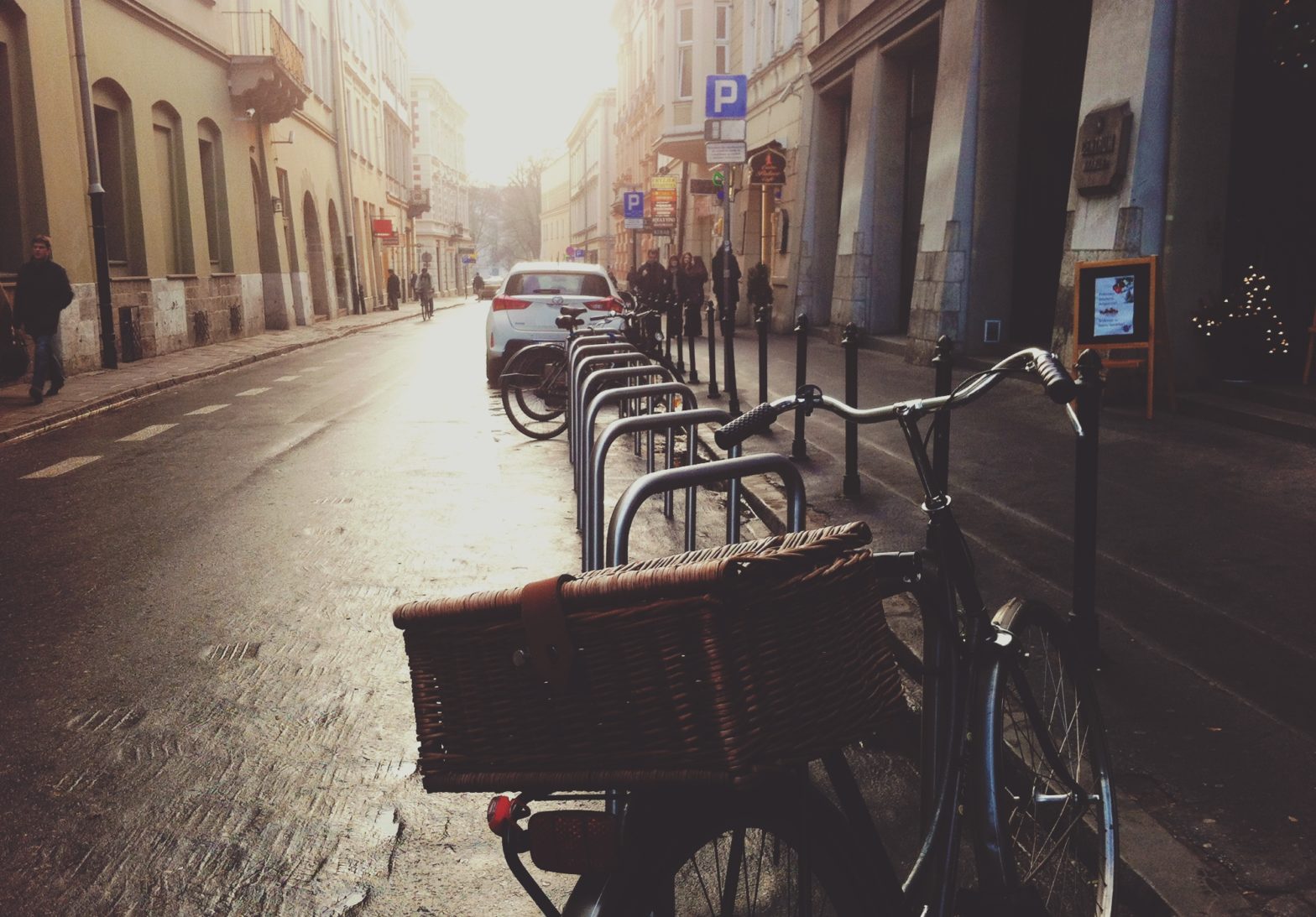
Current Affairs: Electric Bicycles

Summer 2015 brought great news to bike-, environment- and efficiency- enthusiasts across the country when the Ministry of Transportation approved the use of electric bicycles in Israel. Bigger news is that personal import of the trendy new form of transport is now allowed–tax-free.


With over 120,000 electric bicycles imported over the past two years, there has been a notable decrease in cars on the road. This popular mode of transportation sparked serious conversations of safety regulations and enforcement. Effective as of September 1, electric bicycles are required to have a bell or horn, are only allowed to reach speeds of 25 kilometers per hour and must be labeled as an electric bicycle on its side, among other requirements.


Not only will there be requirements for the bicycles themselves, but an over 200% spike in the incidence of bicycle-related accidents has induced talks related to rider safety as well. Bike paths, helmet requirements and even licenses for cyclists might be enforced by police to promote road and rider responsibility and safety.


For Olim, coming to Israel is already a shift in transportation standards. Most anglos find the road safety very different from that of their place of origin. In step with creating a more ecologically friendly state, the addition of electric bicycles is remarkable, yet provides another factor to which Olim need to acclimate. If you are interested in bringing an electric bicycle on your lift and have questions, feel free to get in touch with the experts at KEF International Shipping.


Sources:
http://www.jpost.com/Israel-News/Israel-Police-recommend-new-regulations-on-electric-bikes-after-uptick-in-injuries-405409


http://www.haaretz.com/news/israel/1.606530


http://www.jpost.com/Enviro-Tech/Regulations-for-electric-bicycles-to-take-effect-September-1-368537
Categories
Uncategorized

Aliyah to Jerusalem

“Jerusalem, my happy home, when shall I come to thee?”
Once pictured as the center of the world on maps, Jerusalem has been a cherished destination for thousands of years.
The city is Israel’s capital and home to Hebrew University and many government organizations and NGOs.  It also has a growing high-tech sector.
Jerusalem lies at an elevation of 2,474 feet (754 meters).  It has a Mediterranean climate with hot summers and mild winters and is considerably less humid than coastal cities like Tel Aviv.  Evenings are usually cool, even on the hottest days.  There are occasional snow flurries during some winters, but snow accumulation is rare.
The city’s population is approaching 800,000, with about ten percent native English speakers (and many non-native speakers).  In some areas, like on Emek Refaim (the street that runs between the neighborhoods of Baka and German Colony) one is likely to hear more English spoken than Hebrew.
Housing prices in Jerusalem are high, especially in areas favored by English-speakers.  Less expensive housing is available in neighborhoods like East Talpiot and Arnon ha’Natziv, which are farther from the center.
Moving to Jerusalem can present special challenges since many multi-story buildings lack elevators.  Companies shipping to Jerusalem will need to know how many steps are between the street and the apartment in order to provide a quote.
Some neighborhoods of Jerusalem (like Mea Shearim) are fervently religious;  others are secular or mixed.  The Nefesh b’Nefesh Community Guide, at the link below, provides a searchable database with details on different areas.
Jerusalem offers hundreds of dining choices, from hole-in-the wall falafel stands to gourmet “chef restaurants.”
Entertainment options range from symphony and dance, to theater (some of it in English), movies, bowling, professional soccer, and amateur American-style football.  Cultural events include the Israel Festival, the Jerusalem Film Festival in July, the Chamber Music Festival, and the English Theater Festival held during Pesach.
Resources:
General:
Nefesh b’Nefesh Community Guide
http://www.nbn.org.il/aliyahpedia/community-a-housing/index.php?option=com_content&view=article&Itemid=1230&id=1620%3Ajerusalem-
Official Jerusalem Website
http://www.jerusalem.muni.il/jer_main/defaultnew.asp?lng=2
Housing:
Craigslist-Jerusalem-housing
http://jerusalem.craigslist.org/hhh/
Lagur Israel Real Estate
http://www.lagur.com/english/
Yahoo Flat-hunting Group for Israel
http://finance.groups.yahoo.com/group/flathunting/
Education:
Nefesh b’Nefesh School Database
http://www.nbn.org.il/aliyahpedia/schools-a-higher-education/school-database-beta-20.html
Jerusalem American International School
www.jerusalemais.org
The Anglican International School Jerusalem
http://www.aisj.co.il/
Hebrew Ulpan for Olim Teenagers
ulpanolim@barak.net.il
Beis Midrash Har Tzion
(Hebrew and English program for high school boys)
diasporayesh@yahoo.com
Yerushalayim Torah Academies
(English and Hebrew programs for high school boys and girls)
http://yta.org.il/
Dining:
Eluna.com (kosher dining)
http://eluna.com/
Jerusalem Restaurants
http://www.gojerusalem.com/discover/category_23/Jerusalem-Restaurants
Entertainment:
Jerusalem Attractions
http://www.gojerusalem.com/discover/category_32/Jerusalem-Attractions
Jerusalem Events
http://www.gojerusalem.com/discover/category_1/Jerusalem-Events
Fun in Jerusalem (events and attractions for families and kids)
http://www.funinjerusalem.com/en/blog/events.html
Israel Festival
http://www.israel-festival.org.il/2010/index.asp?lng=Eng
Jerusalem Film Festival
http://www.jff.org.il
Jerusalem Cinematheque
http://www.jer-cin.org.il/Default.aspx?Lang=En
Jerusalem International Chamber Music Festival
http://www.jcmf.org.il/en/
Categories
Aliyah Uncategorized

Helping Elderly Parents Make Aliyah

Bringing your parents to Israel is a mitzvah – and a major undertaking. Fortunately, there are many resources available to help you with the process.
The reasons for moving are many. Your parents may want to be closer to you and their grandchildren, or they may need your care and attention. They may be fulfilling a life-long dream or escaping a harsh climate. Whatever the reasons, careful planning can help make the easier and more enjoyable for everyone.
The first thing to determine is where your parents will live. If they’re going to live with your family, then you need to assure that your home is suitable. A 5th-floor walk-up is probably not going to be a good option for parents in their 70’s. If your building has an elevator or is otherwise accessible, you may need to make small changes such as installing handrails, a seat for the bath or shower, and a riser for the toilet seat.
Will you be able to keep the level of privacy that you and your parents require? Will you need separate entrances?
Especially if you work full-time outside the home, you might need help caring for your parents. Live-in and live-out caregivers are available from agencies, and there are also day-care programs for seniors in some areas. Since it may take 6-8 weeks to arrange a care-giver, start the process well before your parents’ moving date.
The cost of live-in caregivers is a fraction of what they are in North America. $1,000 plus room and board with 1 day off a week for a caring and competent helper is about 10% what you would pay in Los Angeles through an agency.
If your home isn’t suitable, or your parents want a more independent environment or need intensive medical care, a retirement home or care facility may be a better option.
If your parents are healthy and can manage most things on their own, they may only need your help finding an apartment and dealing with Hebrew-language bureaucracy, utilities, etc.
Educate your parents about the realities of Israeli apartments. Large furniture and appliances will not fit in smaller apartments and storage space is usually at a premium compared with homes in North America. Sorting through a lifetime of accumulated possessions, some rich with memories, is an emotional process that should not be rushed. Start well before Shipping date.
Even if your parents are leaving most of their furniture behind, shipping a familiar bed or comfortable chair, plus favorite books and pictures, can help make them more comfortable in their new home.
Categories
Uncategorized

Finding a Job in Israel

Unless you are retired, studying, going into the army or independently wealthy, finding a job is your first priority when moving to Israel.
Some people  who move to Israel are able to live off a mix of government stipends and personal savings during their first few months in Israel. Many choose to attend a government-approved ulpan and learn Hebrew. New olim are eligible for 500 hours of free ulpan. Since full-time ulpan study is generally 25 hours per week, this translates into five months.
For those who are not able to take off five months or are not able to work half-days, work is the way to go. Some people may be able to secure a job offer before their move, usually doing an interview during the pilot trip.  Some employers may even be willing to extend an offer without an in-person interview, however this is rare.
A number of Israeli websites, such as Israemploy, offer daily English-language job listings and a database that’s searchable by location, specialty, industry and other categories. Non-profit organizations like Nefesh b’Nefesh, which provide financial and logistical support for people moving to Israel, also offer employment services.  In addtion, there are several LinkedIn and Facebook groups that provide job leads and networking opportunities.
 
Some people are fortunate enough to bring their jobs from their home countries with them. Many people moving to Israel from the US, UK, Canada and other English-speaking countries continue to work for their old employers, either via telecommuting or traveling back and forth.  The latter option may be grueling for the commuter and the commuter’s family, but it’s an option that many find viable for them. In professions like medicine, where salaries in Israel are significantly lower than in North America and the UK, some sort of telecommuting or commuting arrangement may be the only way to even approach the pre-aliyah income level.
Categories
Uncategorized

Aliyah to Beit Shemesh

Bet Shemesh is a popular destination for English speakers moving to Israel.  About 20% of the city residents speak English as their mother tongue, but the percentage is much higher in certain neighborhoods.
The city of about 80,000 residents is located in a hilly area 20 miles (30 km) west of Jerusalem.  Due to its elevation of 718 feet (219 meters) – much lower than Jerusalem — the summers tend to be hotter and the winters milder than in the capital.
Housing is more affordable than in Jerusalem and Tel Aviv, but prices are rising rapidly, especially in areas favored by English-speaking olim.  The city is growing, adding new housing and new neighborhoods, such as Ramat Bet Shemesh Gimel.
Some of the most popular areas for English-speaking olim are the “Sheinfeld” community in the Givat Sharet area, Nofei Aviv, Givat Savion, Migdal Hamayim, and Nofei HaShemesh.
Ramat Bet Shemesh is a suburb of Bet Shemesh popular with haredi olim.  Most English speakers live in RBS Aleph. The neighborhood has about 40 percent native English speakers.  The RBS areas with the most English speakers are Habesor, Luz, Maor,  Refaim, and Shimshon.
Bet Shemesh has a stop on the Jerusalem-Tel Aviv railway line, offering convenient access to both cities.  The time by train to Tel Aviv is about 46 minutes. A trip to Jerusalem is about 43 minutes.  The train ride from Bet Shemesh to Jerusalem is scenic, with views of a rushing stream, trees, cliffs, and wildlife.  Jerusalem’s Biblical Zoo is a popular destination for Bet Shemesh families and has its own train station.  Buses and private shuttle services are also available.  Most residents own cars.
Several high tech and other businesses are based in Bet Shemesh or in the nearby Har Tuv industrial park, but most residents commute to the Tel Aviv or Jerusalem areas.
The English speaking community of Bet Shemesh has many opportunities for religious learning, sports and recreation.  The hills and valleys are ideal for hiking and biking.  Community centers offer Hebrew ulpan classes for both adults and children, cultural programs, youth groups, English libraries, and a swimming pool.
Categories
Uncategorized

Aliyah to the North of Israel

The North of Israel offers olim the rolling green hills of the Galilee, stunning views from the Golan Heights, and the fertile fields of the Jezreel and Jordan Valleys – as well as the cosmopolitan attractions of Haifa. The area abounds with national parks and reserves, hiking and biking trails, rivers for fishing and kayaking, archeological sites, orchards, and wineries.
Nefesh b’Nefesh’s new “Go North” program makes the region even more attractive for English speakers moving to Israel, with a special grant of up to $25,000 plus a vehicle subsidy of $16,000.
The Go North program has two tracks: the “Garin” (seed group) track to selected communities and the direct integration track for other communities.
The Garin track communities are:
Services for the Garin track include on-site support from NBN staff members, Hebrew language support in the schools, a local “buddy” family, employment assistance, and social programs.
The direct integration track includes:
  • Kfar Tavor
  • Acre
  • Moshav Hazorim
  • Hatzor Haglilit
  • Nahariya
NBN assistance for this track includes regional workshops on Aliyah issues, employment assistance, help with government bureaucracy, and social programs
The North of Israel includes several communities with large numbers of English speakers. These include:
  • Shorashin, a Yishuv Kehilati (cooperative community) of 85 families, in the hills 10 minutes from the city of Carmiel
  • Kibbutz Kfar Hanassi, on a rise above the Jordan River, just north of the Sea of Galilee (Kinneret)
  • Kibbbutz Hanaton, near Tzippori and Nazereth
Housing in the North tends to be much more affordable and spacious than in more central areas of Israel. A single-family home with a yard can be purchased for less than the cost of a small, run-down apartment in one of the major cities.
Resources

General:
Nefesh b’Nefesh “Go North” Program
Galilee Development Authority
Katzrin, Capital of the Golan
Kibbutz Hanaton
Kibbutz Kfar Hanassi
Shorashim

Housing:
Lagur Israel Real Estate
Education:
Nefesh b’Nefesh School Database
Dining:
Eluna.com (kosher dining)
Go Galilee Restaurant Database

Entertainment and Recreation:
North Tourism Center
Tripadvisor – Galilee
Israel Nature and Parks Authority
Attractions and Family Fun in Northern Israel